Why we exist
India has one of the most extraordinary accumulations of built heritage anywhere on earth. Most of these buildings have never been measured. A very large number have never been properly photographed. Fewer still have had their construction traditions recorded while the people who know those traditions are still alive.
Every year, some of them disappear. A house is sold and the buyer tears it down. A road is widened. A roof collapses after one season too many without repair. A family moves and no one remembers what the carved doorway meant, or why the courtyard was proportioned the way it was, or what the lime plaster was made from. The building is gone, and so is the knowledge.
This is not a crisis in the dramatic sense. It is a slow erosion, building by building, year by year, conducted in the ordinary course of cities growing and families changing. It is the more dangerous for being undramatic.
The documentation that does exist is scattered. Survey departments hold records that are difficult to access. Academic institutions produce research that rarely reaches the public. Architects who care about this work keep their drawings in personal collections. Communities hold oral memory that is never written down.
There is no single, open, permanent place where a student, a researcher, a conservationist, or a curious person can go to find a measured drawing of a Chettinad house, a photograph of a Tamil Nadu village school, an oral account of how a Syrian Christian house was built. No place that is free to use. No place that is maintained as a public good.
Heritage Architecture Foundation exists to build that place, and to do the fieldwork that fills it.
The founding story
Heritage Architecture Foundation was founded in 2026 by Jabendra Raja, a 22-year-old working professional from Coimbatore, Tamil Nadu.
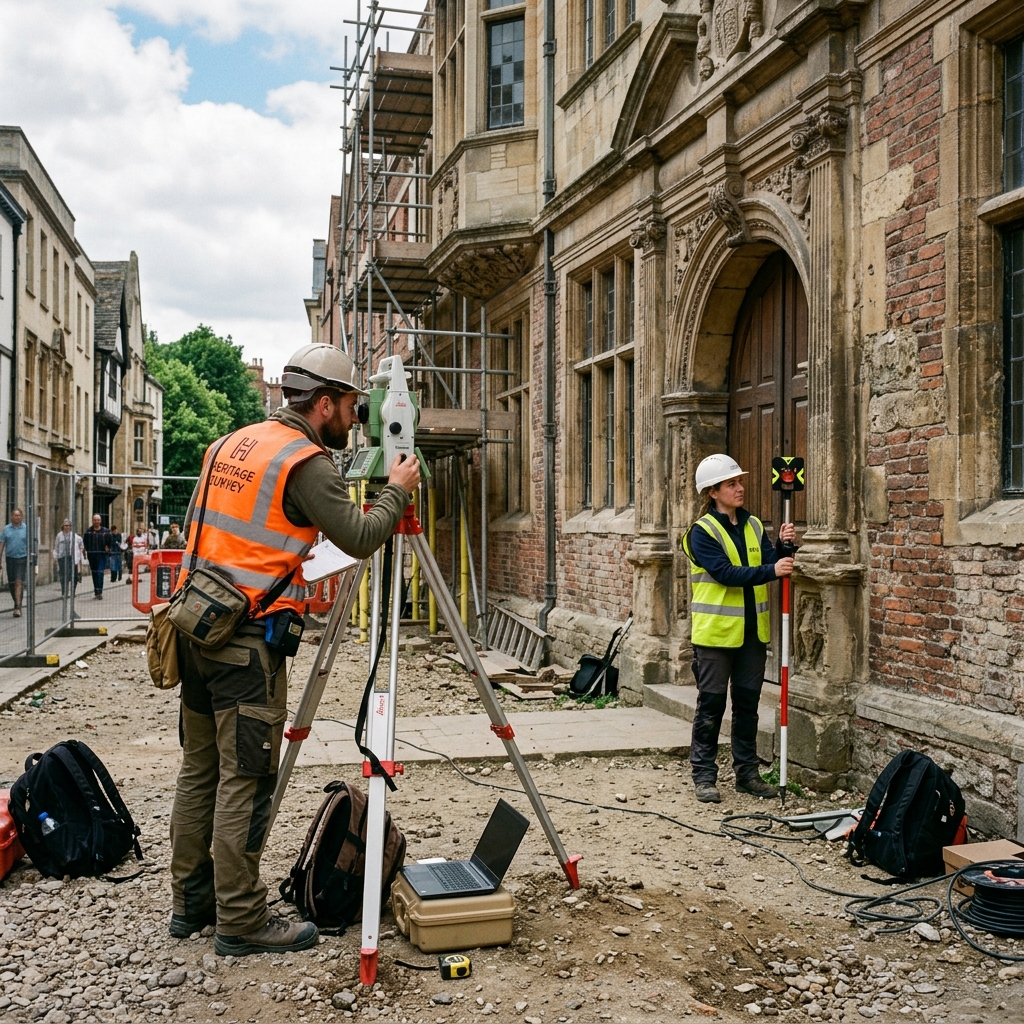
The decision to establish a formal trust rather than simply begin a personal project was deliberate. The work of measuring and archiving historic buildings is long work. A single survey can take four days. A complete record of one house, with drawings, photographs, an oral history and field notes, takes months to properly process and publish. The buildings that matter most are often the ones no one else is looking at. The knowledge that is most at risk is held by people who are elderly.
An individual can start this work. An institution can sustain it.
The trust form was chosen because it is irrevocable and public. Once created, this foundation cannot be taken back. The archive it builds cannot be redirected to private purposes. The commitment is permanent, not contingent on any one person's continued involvement, not dependent on any single generation's enthusiasm.
The first surveys were conducted in Karaikudi and the wider Chettinad region, where a particular combination of factors makes the urgency obvious: buildings of exceptional quality, an accelerating rate of change, and a community of interest large enough to sustain the work.
The foundation is young, deliberately small, and clear about what it is trying to do. It does not claim to save buildings. It claims to record them, which is the precondition of everything else.
Vision
A permanent, open archive of India's historic built environment, built survey by survey, generation by generation.
We imagine a future in which any student in Chennai can find a measured drawing of a Chettinad mansion that no longer exists. In which a conservator in Bangalore can study the construction details of a laterite house in Kerala before undertaking a repair. In which a researcher in London can read an oral history, recorded in Tamil and summarised in English, of how a courtyard house in Kanchipuram was planned and built and used.
We are building for that future. We expect it to take longer than our lifetimes. We have designed the institution to outlast us.
Core values
Exactness
We measure. We draw to scale. We photograph for information, not effect. We cite our sources. We note what we do not know. The archive we build is only as useful as it is accurate, and we take that seriously.
Openness
The archive is a public good. Every record we create is freely available to study and reuse with credit. We do not charge access fees. We do not restrict use to institutional affiliates. We publish under Creative Commons licensing wherever possible.
Permanence
We are building an institution intended to outlast its founders. The trust form is irrevocable by design. Records are retained for a minimum of thirty years and wherever possible permanently. We invest in digital preservation standards: multiple backups, open file formats, geographically distinct storage.
Respect for community
Buildings are not just architectural objects. They are places where people have lived. When we measure a house, we do so with the owners present, and with their consent. When we record oral histories, we obtain informed consent and we honour any conditions on use.
Intellectual honesty
We distinguish between what we measured and what we infer. We credit individual surveyors and oral history contributors. We acknowledge uncertainty. We do not overstate the significance of what we find.
Long-term thinking
We do not chase trends. We do not prioritise the buildings that are currently fashionable over the buildings that are currently at risk. We think in decades.
Governance
Heritage Architecture Foundation is governed by a Board of Trustees of between two and seven members.
Managing Trustee and Chairperson: Jabendra Raja. Founder of the Trust. Responsible for general superintendence of administration, representing the Trust before authorities and the public, and overseeing day-to-day operations.
Trustee: Oviyya Kalayarasi Rengasamy. First Trustee of the Foundation.
The Board meets at least once per financial year (1 April to 31 March). Annual accounts are prepared and audited by a Chartered Accountant appointed by the Board.
The foundation may constitute an Advisory Board of architects, historians, conservators, researchers and other professionals relevant to the foundation's work. The Advisory Board is purely advisory and has no governance authority.
Legal standing
Heritage Architecture Foundation is registered as a public charitable trust in Coimbatore, Tamil Nadu, under the applicable laws of India.
The foundation is in the process of obtaining registration under Section 12AB and Section 80G of the Income-tax Act, 1961. Donations to the foundation, once 80G registration is in effect, are eligible for tax deduction for the donor.
The foundation is authorised to receive Corporate Social Responsibility contributions under the Companies Act, 2013, from companies whose CSR mandate covers heritage, education, culture, research and documentation.
The foundation intends to obtain FCRA registration to receive foreign contributions in accordance with the Foreign Contribution (Regulation) Act, 2010.
The trust is irrevocable. No part of the income or property may be distributed to the Settlor or Trustees. Upon dissolution, all remaining funds and properties are transferred to another public charitable institution with similar objects.
Contact
Heritage Architecture Foundation
27 A, Appachi Garden, Cheran Ma Nagar, Vilankurichi Road
Coimbatore, Tamil Nadu 641035, India