Documentation
Today, and being developed
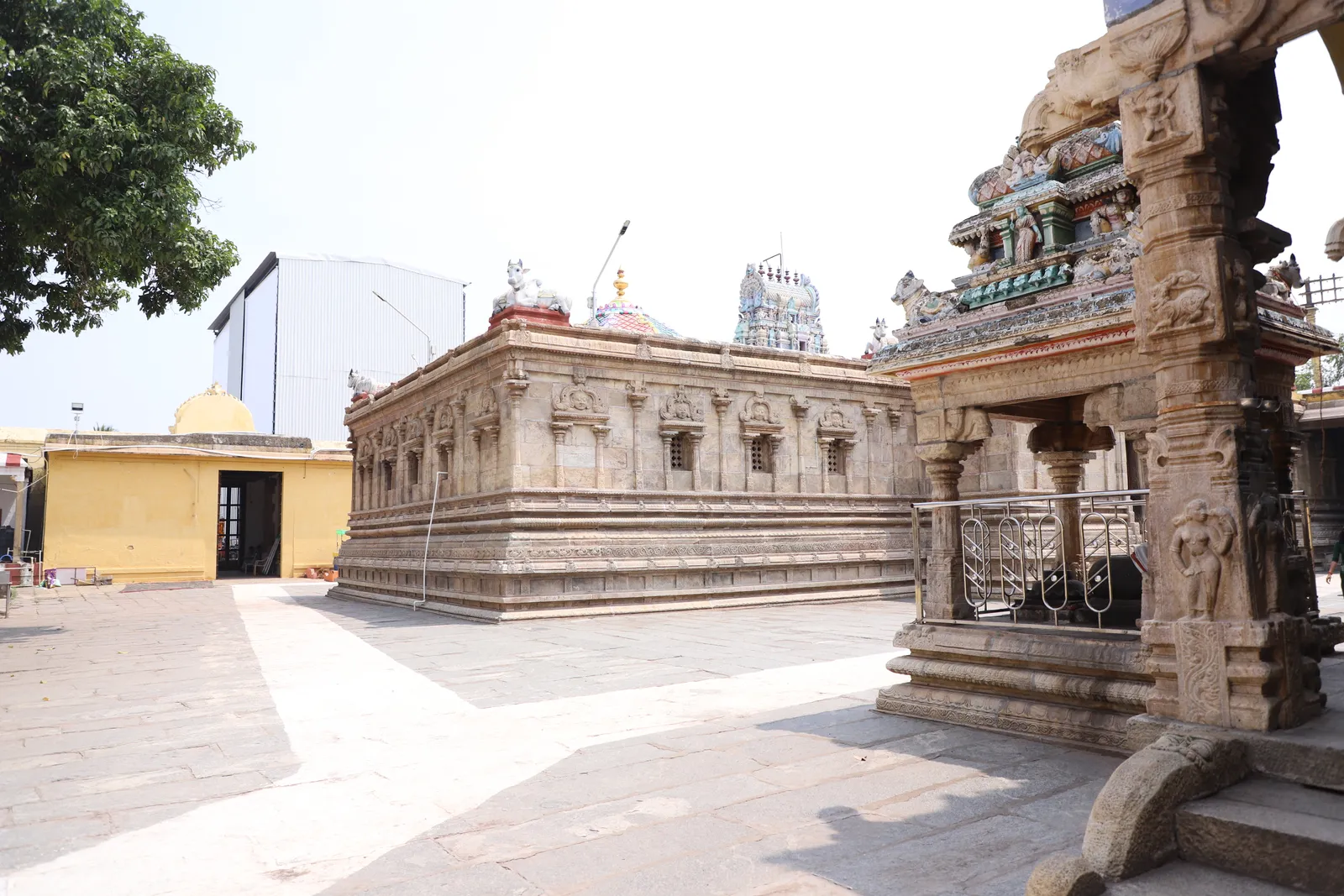
Recording heritage buildings: the structure first, then the context needed to understand it.
Today: HAF's public archive holds records of 16 heritage sites in Tamil Nadu.
Being developed: a broader and more systematic approach to architectural documentation, with written procedures. The aim is that every record is made with the same care and states how it was made: who took part, when, what methods were used, what was collected and where it is kept.
The approach combines observation, photography and drawings with video, drone, 3D and mapping where they make the record more accurate and complete. The method serves the record.
The principle: wherever possible, document a building before it is significantly altered.
See the records →Archive and Kalanjiyam
Archive today; Kalanjiyam being built
Today: a public, searchable archive of 16 records, each with a permanent accession number.
Being built: the Kalanjiyam (களஞ்சியம், a storehouse), a long-term repository of India's architectural memory. In time it is meant to bring together HAF's documentation and material entrusted by others.
A formal access policy for material in the archive is being prepared. For any question about using material from the archive, write to contact@heritagearchitecturefoundation.org.
See the archive →Research
Planned
Research that starts from the building: its form, construction, materials and craft, and how it has changed over time.
HAF has not yet published research. When it does, the work will appear on the Research page.
Research at HAF →Collaboration
Being developed
India's heritage architecture is far larger than any one organisation can document. HAF intends to work alongside architects, conservation architects, archaeologists, researchers, institutions, communities and building owners, adding careful documentation and long-term record-keeping to the work others already do.
HAF does not see itself as competing with anyone in this field. If you would like to explore working together, write to us.
Write to us →Conservation support
Planned, long term
A record is most useful before and during conservation. In the long term HAF intends its documentation to inform conservation work, and to help bring support to specific buildings that need it.
The principle HAF holds: restoration should keep a building's existing character and fabric, not replace them with a modern version that only resembles the original.
HAF does not currently undertake or advise on conservation or restoration.
Learning
Planned, long term
In time HAF intends to be a place where students and professionals learn through real documentation work.
HAF does not currently run internships, courses or school programmes.